• English
  • Spanish

  • Home
  • Services
    • Storage
    • Bottling
    • Private Labeling
    • Sales & Marketing
    • Open Your Store
  • Company
    • About Us
    • Sommelier
    • Sponsorships
    • About olive oil
    • About Balsamic Vinegar
    • Contact Us
  • Factory Direct
    • Gourmet Factory Direct Store
    • Retailers & Resellers
    • Holiday Specials
    • Our Brands
  • Sale
    • Discounts & Promotions
  • Shows/Events
  • Products
    • Premium Extra Virgin Olive Oils
    • Blended Oils
    • Balsamic Vinegars & Glazes
    • Infused Extra Virgin Olive Oils
    • Nougats
    • Chocolates & Biscuits
    • Olives & Appetizers
    • Accessories
    • Gift Packs
  • Cart

  • About us
  • Sommelier
  • Sponsorships
  • About Olive Oil
  • About Balsamic Vinegar
  • Contact Us

"VENETIAN SWEETS" SCALDAFERRO

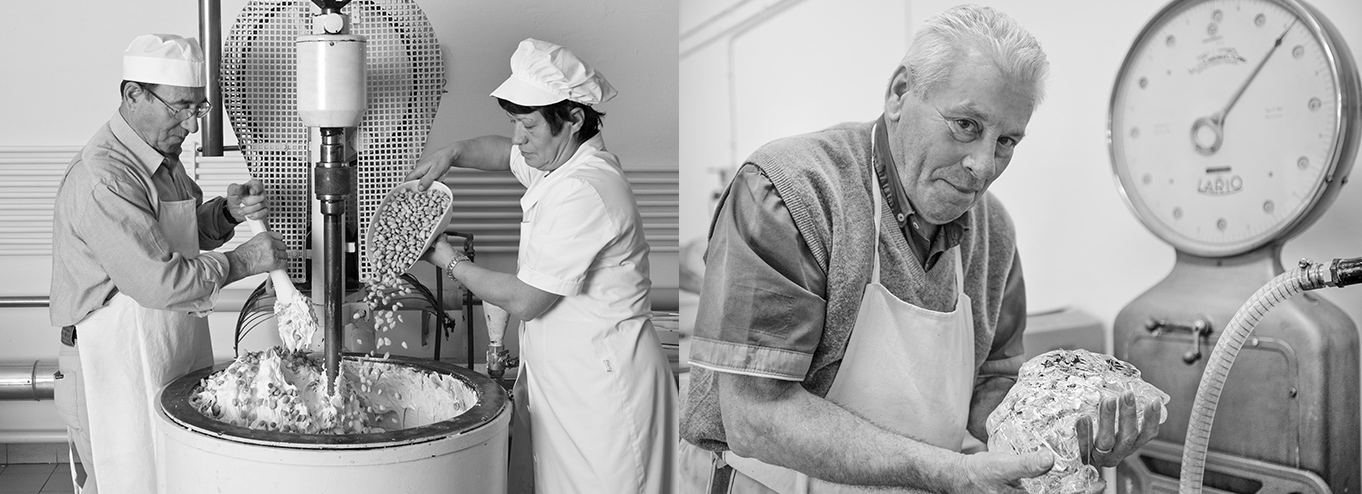
Dating to the early 1900s, the Scaldaferro Torronificio has voluntarily remained a family business where special care is taken in the production of the nougat, which needs natural cooking process, hand toasting, and manual work. This is why every confection is unique, and transmits through its taste the flavor of the past.
OUR INGREDIENTS

The Almonds

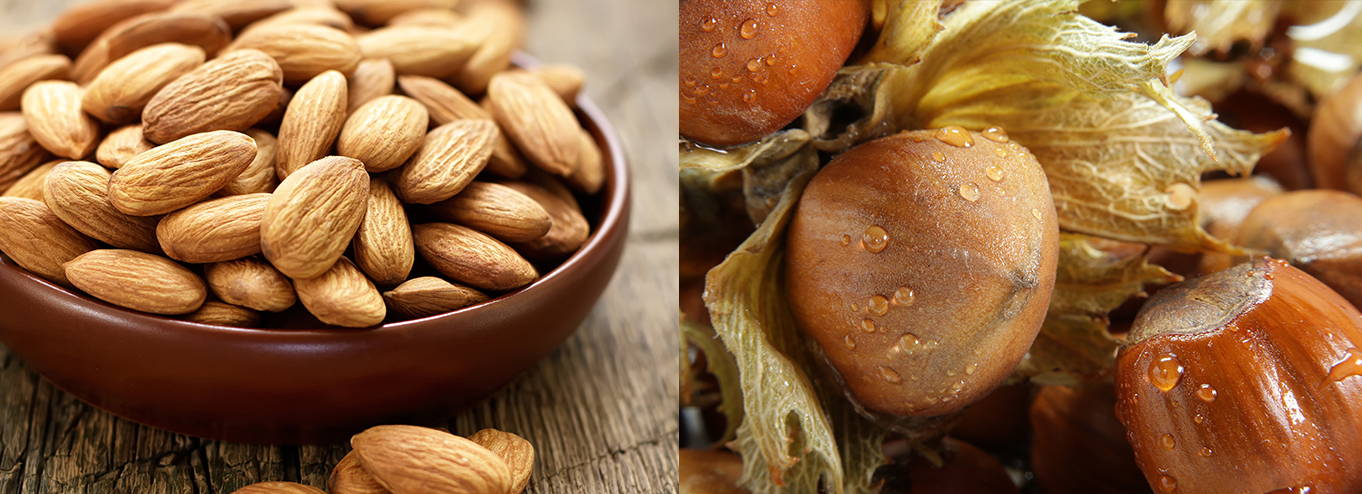
  •  The almonds used for the production of the Scaldaferro “mandorlato” are the oval-shaped bitterless variety of Italian almonds. About 2 cm in size, cream coloured, they have a sweet taste, and a soft yet friable consistency outside which is firmer and crunchy inside. This almond with a rough epidermis is also called cinquecinque, “five-five”, because the tree is full of fruits on branches in groups of 5 or more.
  • The almonds, harvested in the second week of August, are peeled and undergo a triple calibration to arrive at a standard dimension to permit a homogeneous toasting.
  • The variety of these almonds are very rare and its production are restricted coastal zones of south Italy.

The IGP Piedmont Hazelnuts

  • The production of the limited edition, the Torronificio Scaldaferro has selected the production of hazelnuts from the Langhe trefoil.
  • The Piedmont Hazelnut is particularly rich in lipids , amino acids and vitamin E . The hazelnut provides a considerable contribution to antioxidant agents slowing down the aging of tissues.
  • The lipid fraction consists for more than 40% of monounsaturated fatty acids (such as oleic acid) and presents the highest ratio of monounsaturated / polyunsaturated respect to each other dried fruit. Recent studies seem to demonstrate the positive effects of regular consumption of nuts on human health. And indeed confirmed that a diet rich in oleic acid (the same fatty acid present in extra virgin olive oil) is used to maintain the so-called “bad cholesterol” in the blood at low levels, and raising levels of “good cholesterol “, an important defense of vascular pathologies.
  • The Piedmont Hazelnut distinguishes itself from other varieties Italian and foreign for the high oil content (about 70%).
  • The ‘”Protected Geographical Indication (IGP)“ has been recognized by Ministerial Decree 2 December 1993 the name “Piedmont hazelnut”, reserved for the cultivar “Tonda Gentile Trefoil” grown in the territory suitable for the Piedmont region, considering “… the quality special and valuable … “.

The DOP Pistachios from Bronte

  • The Torronificio Scaldaferro produced in a limited edition a special nougat with coriander honey and pistachios.
  • What is The Pistachio ? (“Pistachia vera”) is a shrub with deep roots, the trunk gnarled gray and brownish foliage and clean and the plant grows on the lava rocks, prohibitive for any other type of vegetation. Also, the seeds of pistachio contain many proteins (18-23%), essential oil (50-60%) and vitamins (15-17%).
  • The fruits of pistachio are in clusters, slightly compressed, the size of an olive, a colour that in the early stages is red and ripening from green to reddish-white-pink and yellow-cream. It has a thin husk that crumbles easily and a single seed, aromatic, light green that – one – held until maturity: the producers call it “ruby red outside, emerald green inside.”

The Honey

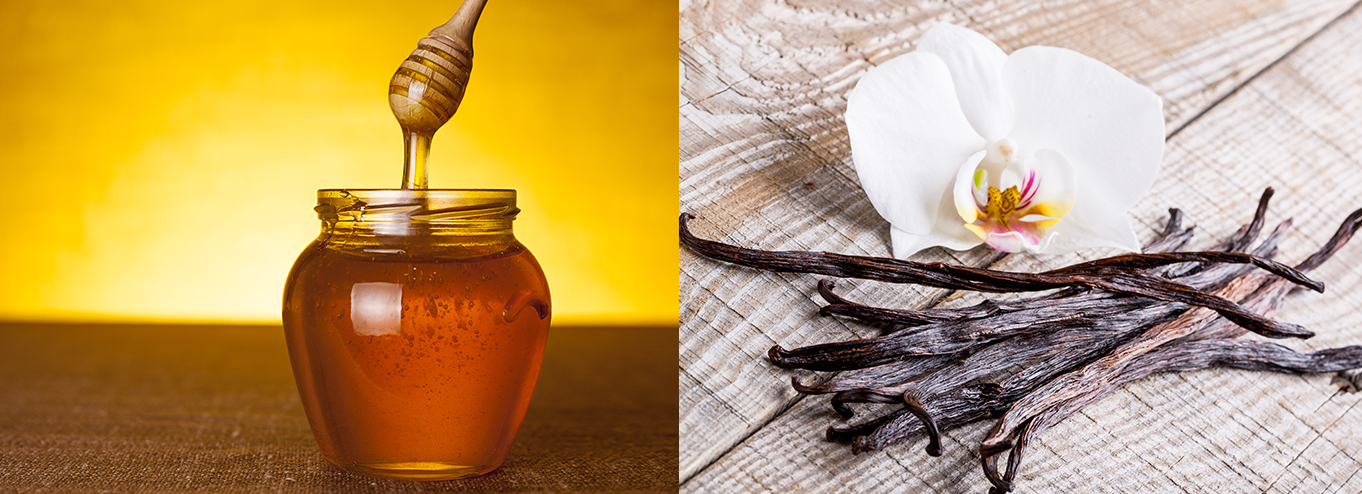
  • The Orange Blossom honey used by the Torronificio Scaldaferro comes from rigorously selected cultivars in the region of the Ribera Plain and the Catania Plain,  Sicily (Italy),  under natural bio-ecological conditions.
  • Along with the similar intense smell of the flowers it has a pleasantly sweet taste with the fresh aroma of orange blossoms, a fruity tendency and a yellow to straw-yellowish color.
  • The orange blossom honey is particularly suitable for our blend because it merges easily, has a persistent fresh and  fruity note, and contrasts well with the sweet tastes of the sugar.
  • Coriander (Coriandrum sativum) originally from the Middle East, it was the Romans who first introduced in Asia Minor.
  • The aroma of the fruit is delicate and intense, and the taste palatable. The fruits of coriander are used as a spice: they are sweet with a slight lemon flavor and aid digestion. Honey has a pale gold color fading, taste mildly sweet and balsamic and slightly spicy aftertaste.
  • The Barena  type of flowers from which is cultivated the barena honey is the common species of the Limonium – commonly called “barena flower” which has a medium consistency and an opaque yellowish color. Its flowering time is from the end of June to the middle of September.
  • The production of the barena honey, in the Venetian lagoon, goes back to the end of the 1800’s. The barena honey is one of the more typical Italian salty honey. The barena honey is characterized by a slightly bitter taste with a strong mineral trace and a dark red color.

Vanilla

  • The Vanilla name is a spice derived from an herbaceous liana belonging to the Orchid family. The pods, fresh and odorless contain thousands of miniscule grains that would be liberated by the explosion of the mature fruit if they were not harvested while green.
  • The maturation of the fruit takes 8-10 months approximately, passing from an initial green coloration, to yellow, and finally to a dark brown at complete maturation. The mature fruit is completely odorless; its unmistakable and prized perfume is acquired under a process of fermentation.
  • As attribute of the vanilla , contains reduced sugars, fatty substances, nitrogenous and tannic acids, some organic acids ( oxalic, tartar, and citric) and manganese.
  • The Torronificio Scaldaferro utilizes in its production the Vanilla Planifolia or Vanilla Fragrans.
  • The vanilla in its pod, after maturation, is added to the powdered sugar and mixed with the honey at the end of the cooking process.

Sugar

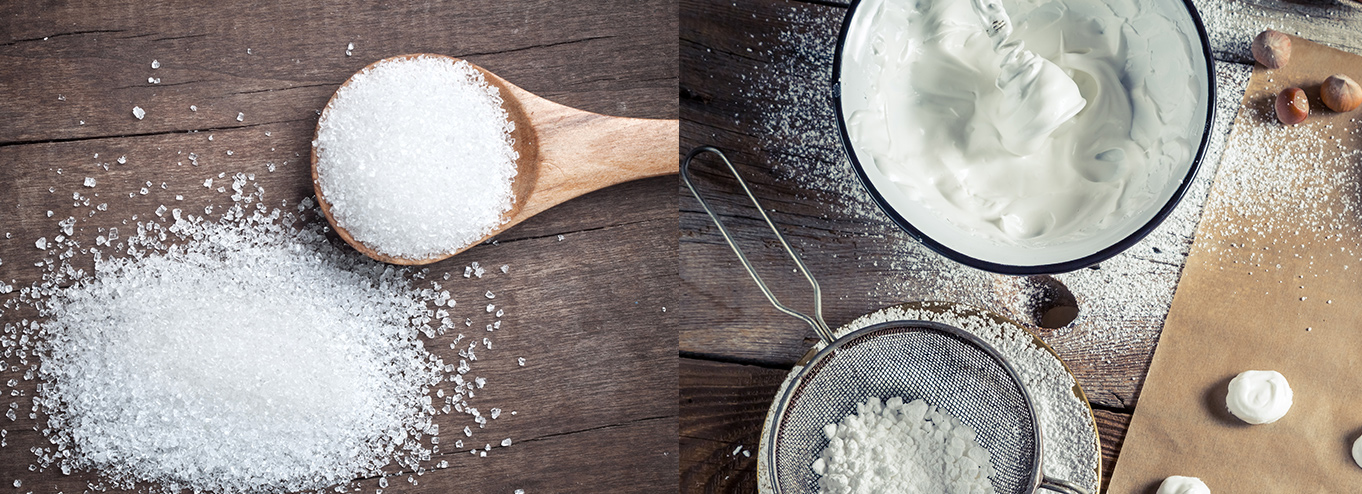
  • The sugar used for the production of the Scaldaferro “mandorlato” comes from the refining of the Italian sugar beet. At the sugar refinery, beets are weighed and washed, before being sliced. Then begins the “diffusion” phase during which the sugars contained in the slices are extracted.
  • In the production of the Limited Edition of the Scaldaferro “mandorlato”, brown cane sugar is also added, which meshes particularly well with the choice blend of honey during the cooking.

Albumen

  • The albumen comes from Italian and French chicken farms, under strict veterinarian controls and fed only with biological fodder and is selected on the base of the breed, the protein content, the color.

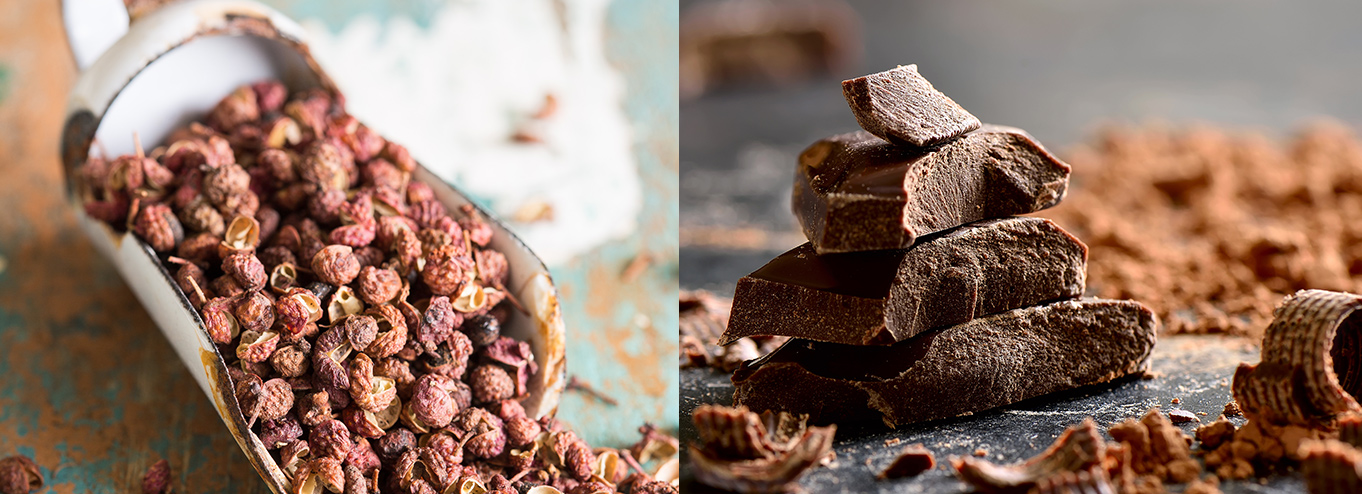
Sechuan Pepper

  • The dried fruits of Sichuan pepper have an aromatic aroma that, for most species, can be described as lemon-like, with more or less pronounced warm and woodsy overtones.
  • The taste of most species is pungent and biting; it may take some time to develop, but in the end produces a strongly numbing, almost anesthetic feeling on the tongue.
  • Sichuan pepper leaves have a fresh flavor somewhat in between of mint and lime.

Chocolate

  • The Scaldaferro Torronificio produces confections and almond clusters covered with highest quality dark chocolate, which unites the unmistakable aromas of the scaldaferro mandorlato with an inviting, delicately scented dark chocolate characterized by an inkling of toasted almonds and hazel nuts, producing a new exquisite balance of tastes.
  • The Scaldaferro Torronificio faithful to the centenarian tradition of the best chocolatiers, utilizes, instead, a recipe for 100% cocoa butter that excludes the addition of other fats, colorings, thickeners and other chemical additives.
  • To further enliven the mandorlato, in the recipe there was included a particular honey of barena: a honey similar in taste and color to arbutus, lightly salted because it is harvested by honey bees from flowers that grow in soil subjected to the tides of the venetian lagoon.
  • The mixture of the sweet taste of the “mandorlato”, the taste of the honey we use, which is slightly salty, and the bitterness of the chocolate, makes the sensory experience really unique.
  • The seeds are dry in order to break down (from 80% to 6-7%) the moisture still contained, interrupting the fermentation process, and avoiding the development of molds. Typically, the drying occurs in a natural way, with exposure to the sun for about two weeks. The seeds are covered and moved continuously during the night or in the event of inclement weather. In other cases, it’s possible adopting the artificial drying under cover, using jets of hot air. And finally it’s time to sorting, cleaning and storage of cocoa beans in jute bags, ready to be shipped worldwide.

THE PROCESS OF NOUGAT

Raw Materials

  • The Scaldaferro “mandorlato” is still produced today using the equipment and the processes of 100 years ago.
  • The first phase of manufacturing concerns the selection and inspection of the ingredients.
  • The peeled almonds, selected and calibrated, are further controlled by hand, and then subjected to analyses by a metal detector.
  • This process extracts any impurities or foreign bodies (shells, skins) to obtain a uniform quality of almonds, guaranteeing a homogeneous toasting.
  • The refined sugar and also that of sugar cane, are filtered in silos and pulverized with a mill until they becomes “icing sugar”.
  • The honey – after laboratory analyses – arrives intact and uncontaminated at the factory, is filtered into barrels and then combined with the mixture, to create a particular and inimitable compound.
  • The vanilla beans from Madagascar are cleaned, chopped and mixed with the powdered sugar.
  • The glucose, heat-extracted from sugar beets, is mixed with the honey.
  • The egg whites are whipped and added very slowly to the mixture in order to facilitate the formation of air bubbles.

Toasting

  • The second phase of production involves the toasting (the cooking process of the almonds).
  • It is an operation of high heating to the surface of the almonds to develop a particular flavor.
  • For this procedure is utilized an oven ingeniously modified: the curved internal blades rotate continually and allow a homogenous toasting of the almonds.
  • Unlike industrial products in which the almonds are dried, toasting at over 170°C causes the secretion of the almond oil from the seed, which is absorbed into the almond paste and gives it a particular taste.
  • During the toasting process some of the almond’s sugars are subjected to a transformation and become caramelized, developing a multitude of complex aromas and flavors.
  • During the toasting two principal mechanisms can be identified: the so-called “Maillard reaction” and the “Caramelizing”.
  • During the Maillard reaction, brown colored substances called “melanoidine” are formed with a noted bitter taste and complex aromas (“malted”, “baked bread”, “caramel” “roasted”, and also “burnt”).
  • These aromatic substances are what produce the typical taste of the “mandorlato”.
  • Along with the Maillard reaction, at higher temperatures a process of dehydration and condensation of sugars begins, which generates substances like “pirodestrine” and caramel, of an orange or brown color and a characteristic taste and aroma: it is the phase that gives the almonds a characteristic color.
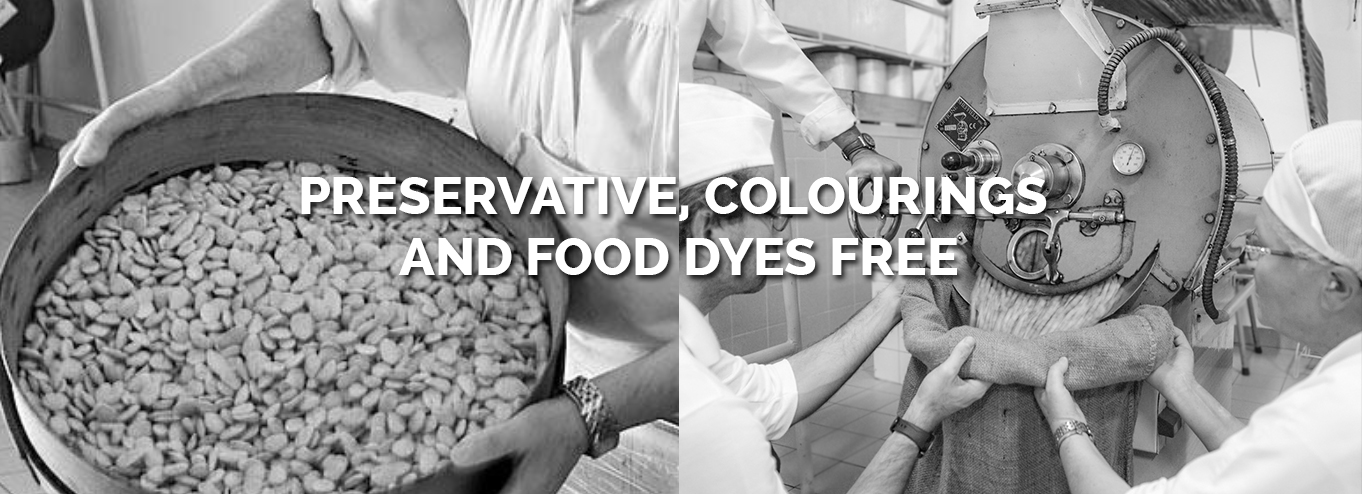
  • After cooking, the almonds are left to cool in jute sacks. Jute, a natural fiber, permits transpiration of the almonds and conserves their aroma and humidity.

Cooking of the Honey and Sugar

  • The third phase of work is honey and sugar cooking.
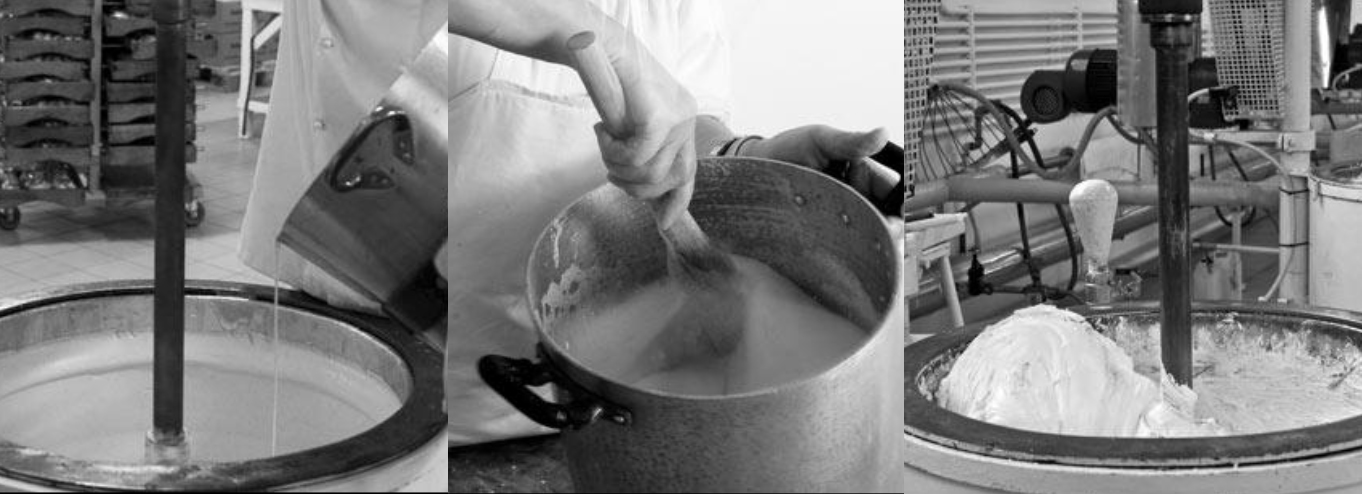
  • The honey and the sugar are poured into copper pots with a mechanic arm. The mechanical arm mixes the product tirelessly for over 8 hours, while it cooks bain-marie, in a double boiler.
  • The double boiler is a method of cooking adapted to food that suffer under a too intense heat and the cooking is slow and delicate.
  • The cooking causes honey and sugar to lose the major part of their water.

Whipping of Albumen 

  • And it is at this point that egg whites are added, which, in contact with the hot mixture, swells up with air, rendering the honey and sugar light and soft.
  • The phase of the whipping of albumen is very delicate.
  • With continued whipping, there is more binding between the proteins and the net thickens.
  • There is need for much attention at this stage, because if the egg whites are whipped for too long there is too much binding, the water is literally “squeezed” out of the net, and there is no way to restore it.
  • The albumen has to be discarded.

Drying

  • After the mounting phase, relatively brief (45 minutes), follows the drying of the mixture phase, which lasts 6-7 hours.
  • At this point the almonds are added along with powdered vanilla to the mixture and the nougat is manually removed from the pot and hand placed on a bed of wafers.

Placement by Hand

  • The packaging by hand of the product is the final phase.
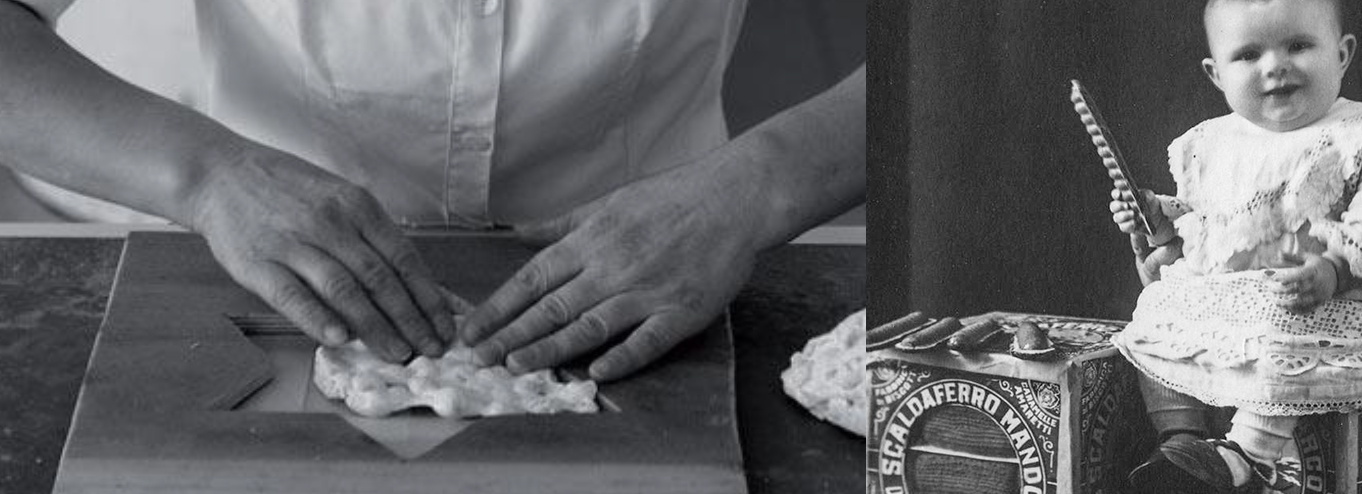
  • Unlike industrial products, the unique Scaldaferro “mandorlato” is placed entirely by hand into its characteristic flakes.
  • This allow the product to maintain a major friability, because the air enclosed in the cooked albumen does not escape by rolling or other mechanical procedures (levelling, centrifuge) and is ready to be eaten in friable bite sizes.


Connect with us and learn about all our services. Miami Olive Oil offers a wealth of solutions for growers, producers, retailers and olive oil enthusiasts.

Services

  • Storage
  • Bottling
  • Private Labeling
  • Sales & Promotions
  • Open Your Store

Company

  • About Us
  • Sommeliers
  • Sponsorships
  • About Olive Oil
  • Contact Us

Factory Direct

  • Gourmet Factory Direct Store
  • Retailers & Resellers
  • Holiday Specials
  • Factory Promotions
  • Our Brands

Shop

  • Premium Olive Oils
  • Balsamic Vinegars
  • White Balsamic Vinegars
  • Infused Extra Virgin Olive Oils
  • Nougats
  • Chocolates & Biscuits
  • Olives & Appetizers
  • Accessories
  • Special Offers
  • Sales Policies
> Order Now. We Deliver.

© 2014 by Miami Olive Oils & Beyond. All Rights Reserved. Website Design Company DAISHO